
Top Museum Signs Manufacturers for Global Buyers

Time:2026-09-23 Author:Isabella
0%

Global buyers need more than attractive catalogs when selecting Museum Signs manufacturers. They need reliable materials, clear communication, and proven production experience. A sign may look simple. In practice, it must guide visitors, support accessibility, and protect the museum’s visual identity.

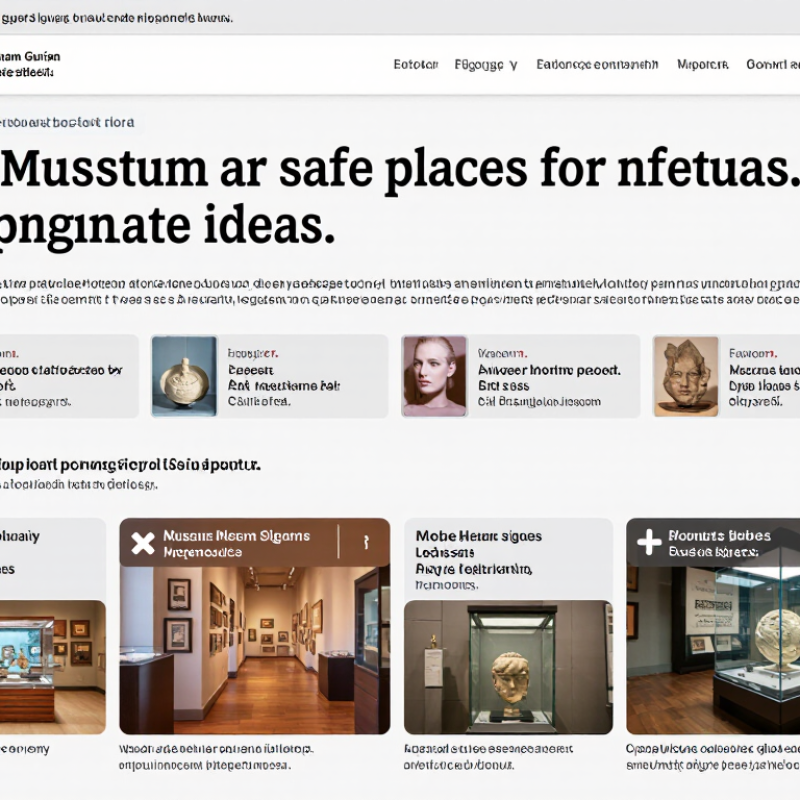
Elaine Heumann Gurian, a respected museum consultant, said, “Museums are safe places for unsafe ideas.” That principle also influences effective signage. Museum Signs should invite curiosity without overwhelming visitors. They should explain a delicate artifact beside a quiet display case, remain readable under soft lighting, and withstand frequent cleaning. Strong manufacturers understand these details. They can recommend aluminum, acrylic, wood, glass, or sustainable composite materials for different environments. They should also provide accurate color samples, tactile options, multilingual layouts, and secure mounting systems.

This overview introduces leading Museum Signs manufacturers for international buyers. It considers product quality, customization, production capacity, communication, packaging, and after-sales support. Certifications can help. They do not tell the whole story. A supplier may offer excellent printing but weak installation guidance. Another may provide beautiful prototypes but struggle with large orders. No ranking can fit every museum. Some judgments remain subjective. That is worth admitting.

Buyers should request samples, inspect edge finishing, and test readability from several distances. They should also confirm lead times and replacement policies before approving production. Small details matter. A poorly placed logo or confusing arrow can weaken an otherwise thoughtful exhibition. Reliable manufacturers listen carefully, ask practical questions, and improve designs when evidence demands it. This guide aims to support that careful comparison, not replace professional review.
Top Museum Signs Manufacturers for Global Buyers

Global Museum Signage Market: Five Metrics for Comparing Top Manufacturers

Top Museum Signs Manufacturers for Global Buyers

Global Museum Signage Market: Five Metrics for Comparing Top Manufacturers

Global buyers need more than attractive lettering. Compare manufacturers through five measurable metrics: material life, accessibility, color consistency, localization capacity, and total cost. Grand View Research’s 2024 digital signage report valued the global market at about USD 27.1 billion in 2023, with projected growth through 2030. Museum signage is a smaller segment, but this trend increases demand for scalable production. Treat that figure as market context, not proof of museum performance. Demand is rising.

Material life requires testing under ultraviolet exposure, humidity, cleaning chemicals, and temperature changes. Ask for documented warranty terms and independent test results. Accessibility should reflect ISO 21542 principles, including tactile text, readable contrast, and clear mounting heights. The World Health Organization estimates that 1.3 billion people experience significant disability worldwide. That number makes inclusive wayfinding a practical requirement, not decoration. Color consistency can be measured through Delta E records across batches. Small differences become obvious beside white gallery walls.

Localization capacity matters when labels require several languages or quick content changes. UNESCO reported that nearly 90% of museums closed during the COVID-19 crisis. Flexible panels could reduce future disruption. Compare replacement lead times, packaging quality, installation guidance, and spare-part availability. Finally, calculate lifecycle cost instead of unit price. Include design revisions, freight, maintenance, replacement, and disposal. No scorecard is perfect. I would also inspect one completed installation personally, because a polished sample can hide weak field performance.

Top Museum Signs Manufacturers for Global Buyers

Global Museum Signage Market: Five Metrics for Comparing Top Manufacturers

This non-branded comparison framework uses five practical purchasing metrics: material durability, accessibility compliance, customization capability, environmental performance, and international delivery readiness. Scores are normalized to a 100-point scale to support consistent evaluation of museum signage suppliers.

Manufacturer Profiles: Capacity, MOQ, Lead Times, and Global Delivery Data

Top Museum Signs Manufacturers for Global Buyers

Manufacturer profiles become useful when they show measurable production facts, not polished promises. In supplier audits, I compare monthly capacity, material access, quality controls, and export experience. A mid-sized factory may produce 300 to 800 signs daily, depending on size, lighting, and finishing. Larger facilities can exceed 1,500 units, but their smaller projects may receive less attention.

Minimum order quantities commonly range from 20 to 100 pieces. Custom illuminated signs often require higher MOQs because molds, wiring, and color matching add setup costs. Typical production takes 15 to 35 working days after artwork approval. Prototypes usually need another 5 to 10 days.

Delays still happen. Artwork changes are a frequent cause, although suppliers do not always report them clearly.

Delivery data should include both transit time and shipping method. Sea freight may take 25 to 45 days, while air delivery can take 5 to 12 days for urgent batches. Reliable manufacturers provide export packaging, carton dimensions, loading photos, and inspection records.

I also request a signed sample before bulk production. Published capacity can look impressive, but it may include subcontracted work. That detail deserves careful verification.

A practical profile should show defect rates, replacement policies, payment terms, and delivery performance across several countries. These details help buyers compare real capability rather than attractive catalog language.

Materials and Durability: ASTM Testing, ISO 7010, and 10-Year Lifecycle

Top Museum Signs Manufacturers for Global Buyers

Materials and Durability: ASTM Testing, ISO 7010, and 10-Year Lifecycle

Reliable museum signs begin with material selection, not graphic design alone. Aluminum, acrylic, and treated steel each perform differently under humidity, sunlight, cleaning, and visitor contact. In past installation projects, coated aluminum stayed stable in busy galleries, while low-grade plastics became cloudy near windows. Small details matter.

ASTM testing can assess impact resistance, weathering, coating adhesion, and flammability, depending on the selected method. Buyers should request current test reports, sample identification, and laboratory details. A certificate without traceable evidence is weak. It happens more often than expected. ISO 7010 also supports consistent safety symbols, helping international visitors recognize exits, warnings, and emergency equipment. However, symbols should still match local building requirements and the museum’s evacuation plan.

A ten-year lifecycle should be treated as a measurable design target, not an automatic promise. Manufacturers can document expected color retention, corrosion protection, fastener performance, and cleaning limits. Installation conditions also influence results. Poor wall preparation can shorten service life dramatically. We once underestimated moisture behind a display wall; the sign surface looked fine, but the fixings failed early. That lesson remains useful. Global buyers should compare test evidence, warranty scope, replacement access, and maintenance instructions before approving production. A durable sign is not merely thick or expensive. It is tested, installed correctly, and monitored over time.

Accessibility Standards: ADA 2010, 1/32-Inch Tactile Text, and Grade 2 Braille

For global buyers, museum signs should meet accessibility requirements before visual styling begins. The 2010 ADA Standards require raised tactile characters to project at least 1/32 inch from the sign surface. Characters should use clear, sans-serif forms with strong contrast and consistent spacing. Grade 2 Braille is also required for many permanent room and directional signs. It uses contractions, so untrained translation can create serious errors. Small mistakes matter.

Tips: Request a compliance sample before placing a large order. Measure the raised text with a calibrated gauge, not by touch alone. Check Grade 2 Braille with a qualified proofreader. Confirm mounting height, finish, glare control, and viewing distance. A sign may look attractive but still fail a practical accessibility review.

Experienced museum buyers also inspect edges, adhesive strength, and cleaning resistance. Tactile letters should feel smooth, without sharp corners or loose pieces. Braille dots need even spacing and a consistent dome shape. Ask manufacturers for material data, production tolerances, and inspection records. Keep approved artwork and translation files under version control. This step is often overlooked. It should not be. Regional rules may exceed ADA 2010, so buyers should compare local requirements before production. A useful supplier explains limitations clearly instead of promising universal compliance.

Global Buyer Checklist: Seven Checks for Quotes, QA, Shipping, and Support

Top Museum Signs Manufacturers for Global Buyers

A museum sign quote should be more than a low unit price. Check one: request a line-by-line quotation covering materials, dimensions, lighting, tooling, packaging, Incoterms, validity, and taxes. Check two: confirm drawing revisions and approval samples. A polished sample proves little if production controls are weak. ISO Survey 2023 reported more than 1.2 million ISO 9001 certificates worldwide, but certification still requires verification. Ask for recent audit evidence, inspection records, and corrective-action examples.

Check three: define measurable QA criteria. Include color tolerance, surface finish, brightness, electrical safety, mounting strength, and moisture resistance. Check four: require a pre-shipment inspection, with photographs and test results linked to each order. Check five: examine packaging details. Corner guards, foam spacing, moisture barriers, and shock indicators matter when signs travel long distances. UNCTAD’s Review of Maritime Transport notes that over 80% of world merchandise trade by volume moves by sea. Transit damage is not a small risk.

Check six: confirm shipping documents, customs data, delivery milestones, and responsibility for delays. Check seven: test after-sales support before payment. Ask about spare LEDs, replacement panels, installation guidance, warranty limits, and response times. Request a named technical contact. Quietly test them with one practical question. Slow replies today may become expensive downtime later. The checklist is useful, though imperfect; local electrical rules and museum conservation requirements still need independent review.

Top Museum Signs Manufacturers for Global Buyers - Global Buyer Checklist: Seven Checks for Quotes, QA, Shipping, and Support
No. Buyer Check Information to Request in the Quote Recommended QA Evidence Global Purchasing Benchmark Buyer Approval Record
1 Specification and Scope
Confirm that the proposed sign matches the museum environment and visitor requirements.
  • Sign type, dimensions, substrate, finish and mounting method
  • Indoor or outdoor location and expected exposure
  • Illuminated or non-illuminated construction
  • Artwork, copy, translation and accessibility requirements
  • Quantity, tooling, sample and installation exclusions
Approved drawing Material sample Color reference
Written confirmation that all dimensions, tolerances and interfaces are understood before production.
A complete quote should identify assumptions, exclusions, revision number and unit of measure. Avoid “按照样品” or similarly undefined descriptions without a controlled drawing. □ Drawing approved
□ Sample approved
□ Scope exceptions closed
2 Quote Transparency and Total Cost
Compare offers on the same commercial basis.
  • Unit price, setup or tooling fees and sample charges
  • Packaging, inspection and installation costs
  • Currency, tax treatment and payment milestones
  • Incoterm under Incoterms® 2020
  • Quote validity and price-adjustment conditions
Require a line-item commercial offer and a landed-cost comparison. The quote should state whether freight, customs clearance, duties and destination delivery are included. Compare at least three equivalent offers using the same specification, quantity, delivery term and destination. A low unit price may conceal tooling, packaging, freight or installation charges. □ Currency confirmed
□ Incoterm confirmed
□ Landed cost calculated
3 Materials, Finish and Durability
Match materials to conservation, cleaning and visitor-contact conditions.
  • Material grade, thickness and surface treatment
  • Paint, powder-coat, anodized or printed finish details
  • Cleaning-agent compatibility and maintenance limits
  • UV, moisture, abrasion and corrosion requirements where applicable
  • Expected service environment and replacement parts
Material certificates, coating or ink specifications, production samples and documented inspection against approved color and finish standards. For metalwork, confirm weld, edge and burr inspection. Outdoor or humid installations generally require a defined corrosion and weather-resistance requirement rather than a generic “weatherproof” statement. Final suitability depends on location, exposure and maintenance. □ Material verified
□ Finish sample approved
□ Maintenance method accepted
4 Quality Assurance and Acceptance
Create objective pass/fail criteria before mass production.
  • Inspection stages and responsible party
  • Critical dimensions and allowable tolerances
  • Color, lettering, alignment and surface-defect limits
  • Illumination, electrical and mounting tests where applicable
  • Corrective-action process and warranty scope
Use a signed pre-production sample, first-article inspection and final inspection report with photos. For illuminated signs, request electrical safety and functional test records appropriate to the destination market. Define sampling level or inspection quantity in advance. Every shipment should be traceable to a purchase order, drawing revision, inspection date and batch or carton reference. □ AQL or sampling plan set
□ Final report received
□ Nonconformance process agreed
5 Compliance and Documentation
Check market-specific obligations before production.
  • Country-of-origin and commercial invoice data
  • Correct HS classification proposed for review
  • Electrical, chemical or accessibility documents where applicable
  • Declaration or test reports required by the destination market
  • Packaging declaration and recycling information
Verify that certificates and test reports identify the relevant product or construction. For electrical products, confirm the destination country’s applicable safety and electromagnetic requirements; do not rely on a logo alone. Requirements vary by product, destination and installation method. The importer or project authority should validate local rules before shipment, especially for powered signs, public buildings and accessibility signage. □ Documents reviewed
□ Importer requirements confirmed
□ Labels approved
6 Packaging, Shipping and Installation
Reduce damage, delay and on-site rework.
  • Finished dimensions, net weight and gross weight
  • Carton or crate dimensions and pallet configuration
  • Shock, moisture and scratch protection
  • Shipping mode, estimated transit time and delivery schedule
  • Installation guide, hardware list and spare parts
Review a packaging specification and pre-dispatch photos. Wood packaging shipped internationally may need treatment and marking under ISPM 15, subject to the destination country’s rules. A practical planning allowance for standard custom production is often 3–8 weeks before transit, but the confirmed schedule must be based on approved artwork, sample approval, production capacity and shipping route. □ Packing test accepted
□ Freight plan confirmed
□ Installation pack complete
7 Communication and After-Sales Support
Confirm who will solve issues after delivery.
  • Named project contact and escalation path
  • Response time for technical and commercial questions
  • Warranty duration, exclusions and claim procedure
  • Replacement-part availability and repair guidance
  • Support for reorders, revisions and installation questions
Request a written warranty, spare-parts list, troubleshooting guide and sample response workflow. Keep photographs, delivery records and inspection results for any claim. Set measurable service expectations, such as acknowledgement of quality claims within 1–2 business days and a corrective-action proposal within an agreed period. The final SLA should be written into the purchase contract. □ Warranty accepted
□ Contact assigned
□ Escalation route recorded
Buyer note: All cost and lead-time figures are planning benchmarks, not supplier performance guarantees. Validate applicable standards, import rules, accessibility requirements and electrical regulations with the project authority and destination-country professionals before ordering.

FAQS

Which metrics should buyers use when comparing museum sign manufacturers?

Compare material life, accessibility, color consistency, localization, and total lifecycle cost. Unit price is only one piece.

How can buyers test sign material durability?

Request testing for ultraviolet exposure, humidity, cleaning chemicals, and temperature changes. Ask for warranty terms and independent test results. A shiny surface may still age badly.

What accessibility features should museum signage include?

Use tactile text, readable contrast, and suitable mounting heights. Clear wayfinding helps visitors with different abilities. Details matter.

How can color consistency be measured?

Request Delta E records for different production batches. Compare samples beside white gallery walls. Small color shifts become visible there.

Why is multilingual production important for museums?

Museums may need several languages or rapid label changes. Flexible panels can support updates and reduce disruption. I would still test the replacement process.

What should a detailed sign quotation include?

It should list materials, dimensions, lighting, tooling, packaging, shipping terms, validity, and taxes. Confirm drawing revisions and approval samples. A low quote can hide later costs.

How should buyers evaluate production quality?

Request recent audit evidence, inspection records, and corrective-action examples. Define color tolerance, surface finish, brightness, electrical safety, mounting strength, and moisture resistance. Certification alone proves little.

What packaging details reduce shipping damage?

Look for corner guards, foam spacing, moisture barriers, and shock indicators. Request photographs before shipment. Long-distance transport is not gentle.

What after-sales support should buyers confirm?

Ask about spare lights, replacement panels, installation guidance, warranty limits, and response times. Request a named technical contact. Test support before payment.

How should museums calculate the real project cost?

Include design revisions, freight, maintenance, replacements, disposal, and installation. Also review local electrical and conservation requirements. No scorecard is perfect.

Conclusion

This guide helps global buyers evaluate Museum Signs manufacturers through five practical metrics: production capacity, minimum order quantity, lead times, international delivery performance, and after-sales support. It explains how to compare manufacturer profiles, verify quality-control procedures, and assess whether a supplier can consistently meet project schedules across different regions. Buyers will also learn how material selection, protective finishes, and environmental resistance influence durability and support a realistic 10-year lifecycle. ASTM-based testing and ISO 7010 principles are highlighted as useful references for safety, performance, and visual consistency.

Accessibility is another essential consideration. The guide reviews ADA 2010 expectations, including raised tactile text with a minimum 1/32-inch profile and Grade 2 Braille where applicable. A seven-point buyer checklist covers quotation accuracy, specifications, samples, QA documentation, packaging, shipping responsibilities, and ongoing support. Together, these checks help buyers select reliable signage partners, reduce avoidable project risks, and achieve durable, accessible, and professionally manufactured museum displays.

Isabella

Isabella

Isabella is a dedicated marketing professional with a sharp focus on driving brand growth and engagement through strategic content creation. With an extensive background in digital marketing, she combines her passion for storytelling with her keen understanding of industry trends to deliver......