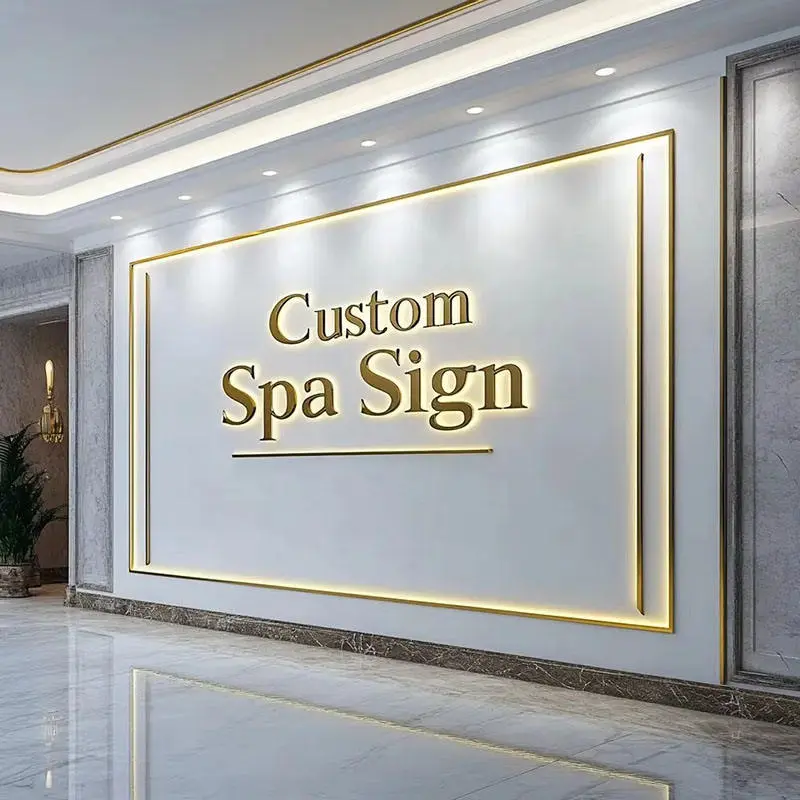
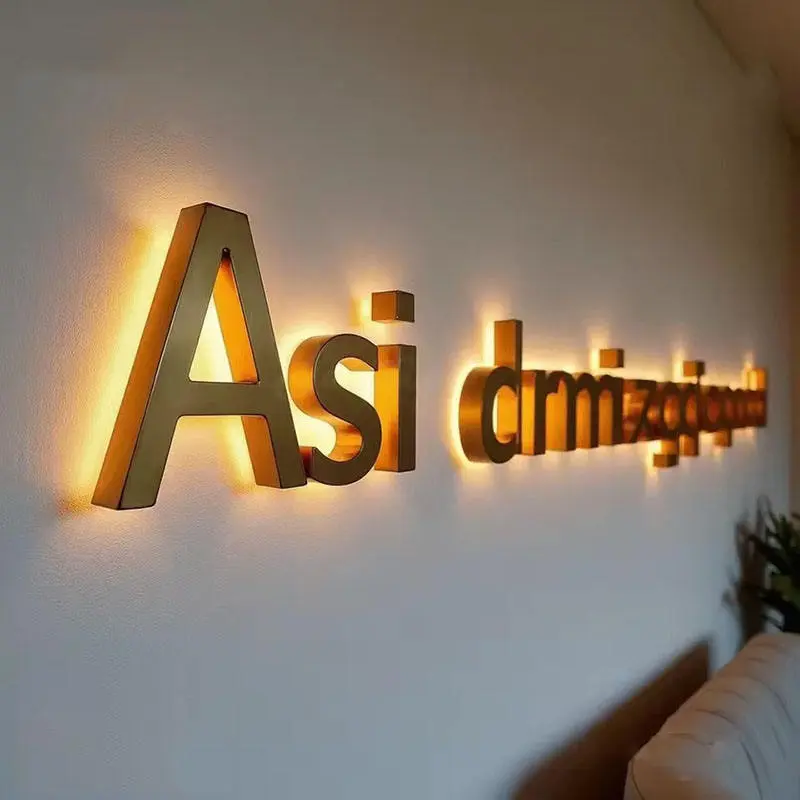
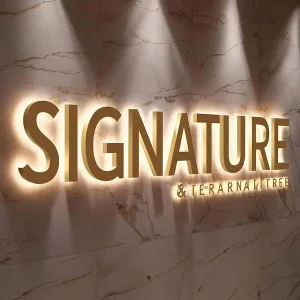
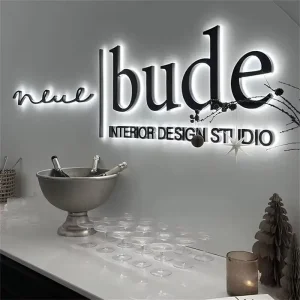
Backlit letters work by reversing the light direction. Instead of shining through the letter face, LEDs point backward toward the wall. Light bounces off the mounting surface and creates a glow around each letter's outline.
The system requires three main components: aluminum letter shells, solid face material (acrylic or metal), and LED strips positioned to direct light away from viewers. When everything works correctly, you get that halo effect people associate with upscale signage.
Wall surface matters significantly. Light-colored, smooth walls produce the best results. Dark brick or textured concrete absorbs too much light, reducing the effect. Many installations include separate backer panels - essentially painted boards mounted between the letters and the wall to provide consistent light reflection.
Quality varies widely in backlit letter manufacturing. Here's what separates good systems from poor ones:
Aluminum gauge: Most quality manufacturers use 0.080-inch aluminum minimum. Some go thicker for larger letters. Thinner material saves cost but can warp, which affects light distribution and creates uneven halos.
Frequently Asked Questions
How do backlit letters create the halo effect?
The effect is created by positioning LEDs to point backward toward the mounting surface rather than through the letter face, allowing light to bounce back and glow around the outlines.
What are the essential components of a backlit sign system?
The system consists of three main parts: high-quality aluminum letter shells, a solid face material (often acrylic or metal), and specifically positioned LED strips.
Does the type of wall surface affect the lighting quality?
Yes, smooth and light-colored walls provide the best reflection. Darker or heavily textured surfaces like brick tend to absorb light, which can weaken the halo effect.
What is the purpose of a separate backer panel?
Backer panels are painted boards mounted behind the letters to ensure a consistent and optimized surface for light reflection, especially when the original wall is unsuitable.
Why is aluminum gauge important in construction?
A minimum of 0.080-inch aluminum is recommended to prevent warping. Thinner materials can distort over time, leading to uneven light distribution and poor visual quality.